
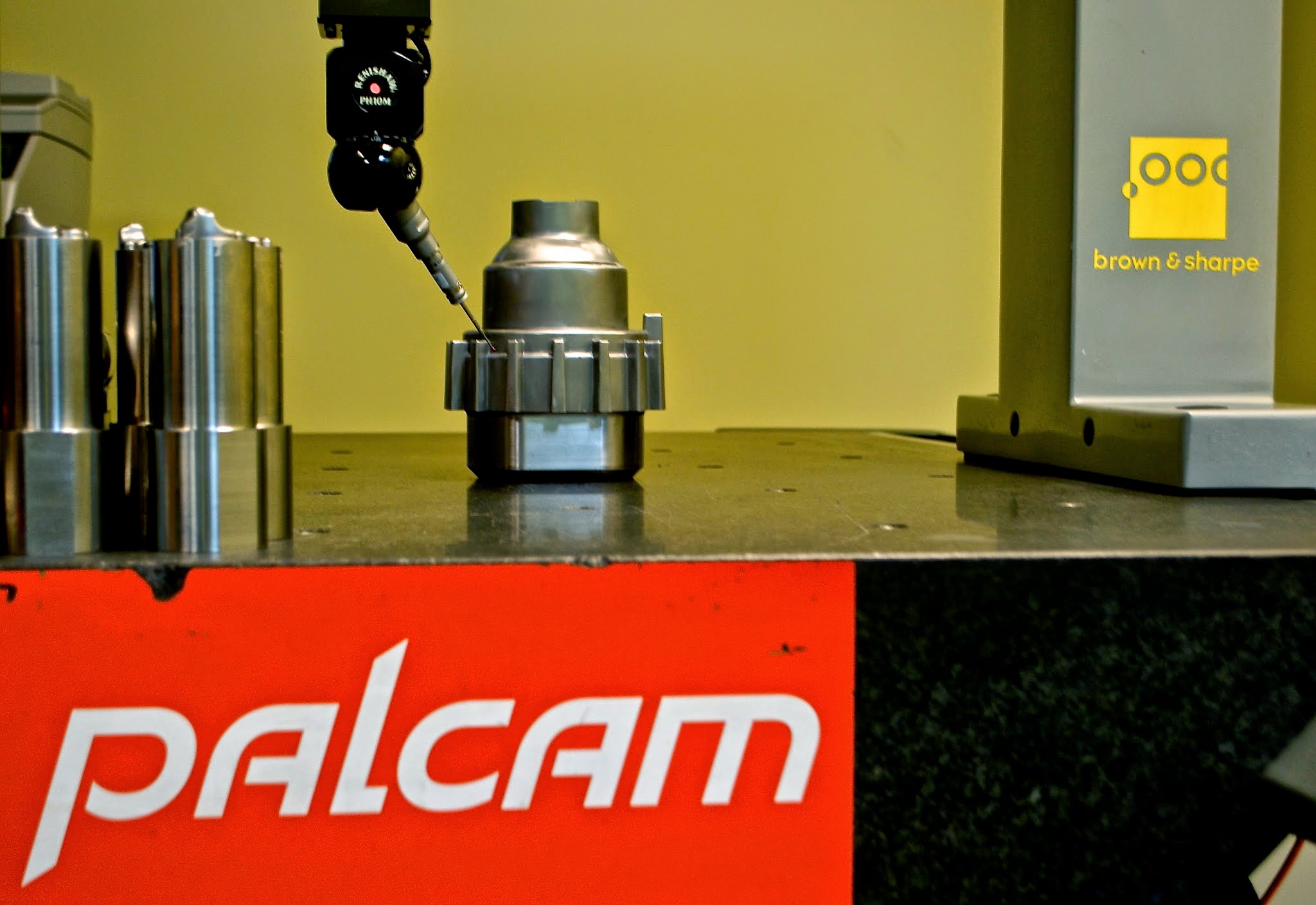
H-13 Additive Manufacturing
Production-grade metal 3D printed inserts for aluminum die casting tooling. H-13 tool steel. 5x lifespan versus maraging steel. Researching and refining since 2015.
5x
Die Life vs Maraging
40%+
Cost Per Shot Reduction
85%
Residual Stress Reduction
2015
AM Research Since
Why H-13 Additive Manufacturing?
Most metal AM providers print die casting inserts in maraging steel. Palcam prints in H-13 — the same material conventional tooling uses — delivering dramatically longer die life.
5x
Lifespan vs maraging steel
5x Die Life
H-13 AM inserts deliver 5x the lifespan of maraging steel inserts in aluminum HPDC applications. Customers including Honda and Multimatic have validated these results in production.
40%+
Lower cost per shot
40%+ Cost Reduction Per Shot
At 2–3x the cost of conventional inserts but 5x the life, AM inserts reduce your cost per shot by over 40%. Customers who adopt AM inserts reorder — the economics speak for themselves.
85%
Residual stress reduction
Conformal Cooling
Additive manufacturing enables cooling channels that follow the contour of the die surface. Conformal cooling reduces hot spots, improves thermal management, and produces better castings with less porosity.
2–3x
Cost vs conventional (but 5x life)
Hybrid Insert Manufacturing
Printing H-13 on a conventional H-13 base reduces cost further. The base is reusable when the top section wears. This hybrid approach makes AM economics viable for a wider range of components.
AM Capabilities
Palcam operates multiple metal 3D printers, including an SLM 280 and custom-built machines. Our custom printers run build chamber temperatures at 400°C+, compared to approximately 200°C on standard industrial machines. This higher temperature reduces residual stress by up to 85%, producing denser, more reliable tooling components.
Every AM component is post-processed in-house on our 5-axis CNC machines, heat treated, and inspected to the same standards as conventional machined tooling.
Full Capability List
- H-13 hot work tool steel (HPDC applications)
- 420 stainless steel (corrosion-resistant applications)
- Conformal cooling channel design
- Hybrid inserts (AM printed on conventional H-13 base)
- Build envelope: 280mm x 280mm x 365mm (SLM 280)
- Custom-built printers running 400°C+ build chamber temperatures
- In-house heat treatment for AM components
- Full post-processing: 5-axis CNC machining, grinding, EDM
- Design for printability services
How It Works
From evaluation to production-ready insert. We handle the full workflow in-house.
Evaluate Your Component
Send us your data. We assess whether AM will deliver meaningful die life improvement for your specific application. Not every insert benefits from AM — we will tell you honestly.
Design for AM
Our team designs the conformal cooling channels and optimizes the geometry for printing. We offer design for printability services to maximize the performance advantage.
Print in H-13
Components are printed on our SLM printers using H-13 hot work tool steel powder. Our custom-built machines run build chambers at 400°C+, versus ~200°C on standard industrial machines, reducing residual stress by up to 85%.
Post-Process & Inspect
Heat treatment, 5-axis CNC machining to final dimensions, surface finishing, and full inspection. Every AM insert ships with the same quality documentation as our conventional components.
Frequently Asked Questions
What materials does Palcam use for additive manufactured die casting inserts?
Palcam prints die casting inserts in H-13 hot work tool steel for HPDC applications and 420 stainless steel for corrosion-resistant applications. H-13 is the same material used in conventional die casting tooling, which is why Palcam’s AM inserts outperform maraging steel alternatives.
How much longer do H-13 AM inserts last compared to maraging steel?
Palcam’s H-13 AM inserts deliver 5x the lifespan of maraging steel inserts in aluminum HPDC applications. At 2–3x the cost of conventional inserts but 5x the life, AM inserts reduce cost per shot by over 40%. These results have been validated in production by customers including Honda and Multimatic.
What is conformal cooling and why does it matter for die casting?
Conformal cooling uses cooling channels that follow the contour of the die surface, rather than straight-line drilled channels. This reduces hot spots, improves thermal management, decreases cycle times, and produces castings with less porosity. Conformal cooling is only possible through additive manufacturing.
Does Palcam offer design services for additive manufactured inserts?
Yes. Palcam offers design for printability services, including conformal cooling channel design and geometry optimization for AM. Send your data to sales@palcam.com and the team will assess whether your component is a good candidate for additive manufacturing.
What makes Palcam’s AM process different from other metal 3D printing providers?
Palcam has researched metal additive manufacturing for die casting tooling since 2015. Our custom-built printers run build chambers at 400°C+, versus approximately 200°C on standard industrial machines, reducing residual stress by up to 85%. Combined with printing in actual H-13 tool steel rather than maraging steel, this produces inserts that perform like conventional tooling but with the design freedom of additive manufacturing.
Is Your Insert a Candidate for AM?
Send us your data. We will evaluate whether additive manufacturing can extend your die life and reduce your cost per shot.